
If your essay has been flagged as AI writing and you wrote it yourself, preserve the submitted file and your existing records. Read the meeting invitation, identify the passages being questioned and check the response deadline. Prepare to explain how you researched, drafted and revised the assignment.
An AI-writing flag is not, by itself, a finding of misconduct. Your response should address the actual concern with genuine evidence and a clear account of your work. If your essay is flagged for AI writing, this information is for you. This guide helps UK university students prepare; your own institution’s procedure determines what happens next.
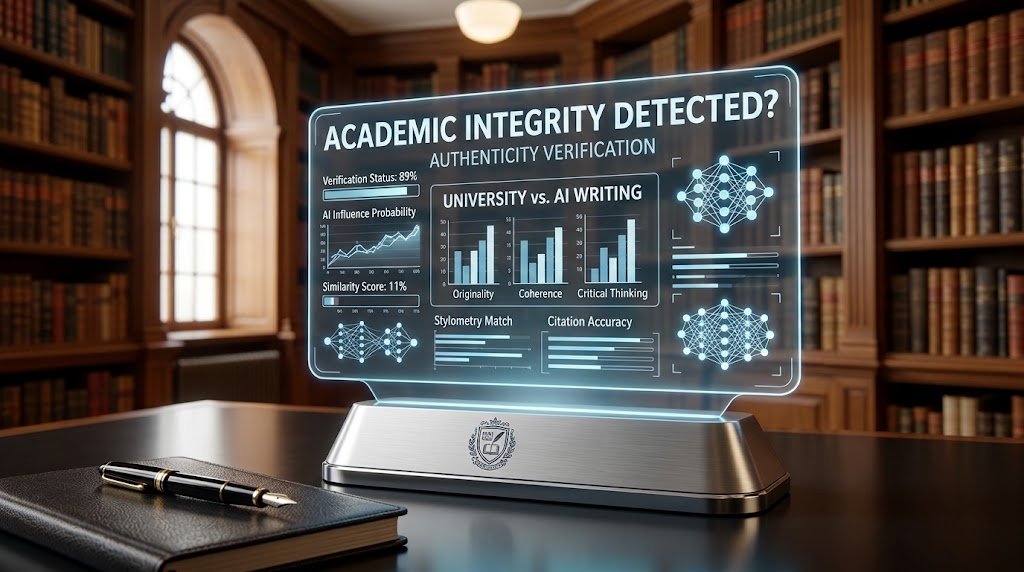
What an AI Writing Flag Does and Does Not Tell You
An AI detector false positive occurs when human-written text is incorrectly identified as AI-generated. Turnitin acknowledges that its model can misclassify writing and says the result should not be the sole basis for adverse action against a student. Further scrutiny, human judgement and institutional policy are needed.
Turnitin’s AI-writing percentage is separate from its similarity score. One assesses qualifying prose for likely AI generation; the other identifies text matching sources. A low similarity result therefore does not settle a concern about AI use.
First establish what raised the concern. Was it an AI-writing report, questions about sources, or something else? Do not assume every authorship meeting begins with a detector result. You also cannot establish that your particular result is a false positive simply because false positives are possible.
First, Read the Meeting Invitation Carefully
Save the invitation and any attached report. Note the assignment, stated concern, meeting date and deadline for sending evidence. Check whether the invitation describes an initial discussion, a formal investigation or an authorship assessment. These may involve different arrangements.
If important details are missing, ask for the relevant passages, the evidence being considered and the applicable procedure. Also ask how and when to submit your response. Keep the request factual: you need enough information to prepare an accurate explanation.
For example, UCL’s 2026–27 academic misconduct procedure distinguishes initial investigations from investigatory vivas where authorship is questioned. That is a UCL example, not a UK-wide timetable. Use the rules applying to your assessment and seek advice if the procedure is unclear.
Gather Evidence of How You Wrote Your Essay
If you are searching for “how to prove I wrote my essay”, start by making the writing process understandable. Several connected records can help explain a decision more clearly than a folder of unrelated screenshots. No single item guarantees that a concern will be resolved.
The Edinburgh University Students’ Association’s guidance identifies essay drafts and writing notes as useful supporting evidence when responding to an allegation. Organise the material you genuinely have, then explain how it relates to the questioned work.
Table 1. Existing Records and Their Limits
| Existing Record | What It May Show | Important Limitation |
|---|---|---|
| Drafts or version history | Changes in wording, structure or argument over time. | A record may be incomplete; it does not automatically identify who made every change. |
| Research notes and annotated sources | The reading and reasoning behind a particular claim. | Possessing a source does not establish how it was used. |
| Outline or plan | How the assignment’s structure developed. | A plan alone does not explain every paragraph. |
| Tutor feedback or dated correspondence | Discussion of an idea or draft during development. | It supports only the stages or passages actually discussed. |
| Tool records and tracked changes | What assistance was used and what changed. | Permission depends on the assessment rules and the actual functions used. |
Preserve Drafts and Version History
Keep existing files intact. Make copies for highlighting or adding explanatory notes. If your writing platform has saved earlier versions, check what is available without overwriting the submitted version. Do not assume every document has a complete history.
Create a short evidence index: filename, existing date where available, relevant paragraph and what the item helps explain. If you write the index today, label it as prepared today. It organises existing evidence; it is not itself a contemporaneous record of writing.
Connect Research Notes to Specific Passages
Choose a questioned paragraph and trace it backwards. Which source informed it? Where are your notes? What changed between the plan and the submitted version? Include enough context for someone else to follow the connection.
Hypothetical example: an outline proposes that recorded lectures could replace seminars. An annotated source notes a limitation concerning discussion. A later draft recommends recordings as supplementary support. Together, these items could help explain why the argument narrowed. They would not establish authorship of unrelated passages.
Record Any Tools or Assistance Accurately
Describe what each tool or person actually did. Spelling correction, translation, sentence rewriting, generating ideas and generating paragraphs are different activities. Identify the functions you used rather than relying on a product name or a broad label such as “grammar help”.
Check the assessment instructions and any declaration requirement. If you used assistance, explain it accurately even if you believed it was permitted. If you are unsure about the boundary, take the relevant records to an adviser rather than guessing or omitting the activity.
For the distinction between language support and changes to content, see what to check in your university’s proofreading policy. Permission for one assignment does not establish permission for another.
What If You Have No Saved Drafts?
Do not create earlier-looking drafts to fill the gap. Explain how you worked: perhaps you revised in one file or did not enable a history feature. Identify any other existing material, such as handwritten plans, source annotations, feedback or research notes.
An honest retrospective timeline can help organise your account. Label it clearly, distinguish remembered dates from recorded dates and link it to existing items where possible. For example: “I believe I changed the structure after the tutorial; the feedback email is dated, but I did not save that draft.”
Missing draft history does not, by itself, answer the authorship question either way. Tell your adviser what is available and what is missing. Prepare to discuss your actual reasoning without claiming evidence you do not possess.
Prepare to Explain Your Writing Decisions
Read your submitted assignment alongside the sources behind the questioned passages. Explain your central claim, why you selected particular evidence and what limitations affected your conclusion. If a reference is incorrect, acknowledge the error and explain what happened honestly.
Turnitin’s guidance on conversations about possible AI use includes discussing the process used to complete an assignment. As preparation, practise explaining your own decisions rather than memorising a defence.
- What question was this paragraph answering?
- Why did I choose this source rather than another?
- Which claim did I revise, and why?
- What does the evidence support, and what does it leave uncertain?
Hypothetical example: “I initially used ‘causes’, but changed it to ‘is associated with’ because the study did not establish causation.” A useful explanation connects a specific wording choice to your reading. Use this approach only for decisions you actually made.
For future study habits, our AI and critical thinking self-check helps you examine which decisions remain yours. It is a learning exercise, not a test that certifies authorship.

Check Meeting Arrangements and Available Support
Ask your students’ union advice service or designated student adviser to review the invitation with you. Confirm whether someone may accompany you, who qualifies, how evidence must be supplied and whether you need any adjustments. Ask early if these arrangements affect your ability to participate.
For an online meeting, check access to your files and the meeting link. Keep the submitted essay, invitation and evidence index easy to find. If you cannot attend, contact the organiser promptly and follow the stated process; do not assume the meeting has been postponed.
Avoid Actions That Make Your Evidence Harder to Assess
Keep the submitted essay as the reference point. Do not replace it with newly polished wording and present that version as the original. Do not invent dated notes, backdate files or make a rehearsal answer sound like a historical record.
Another detector result cannot establish your writing history. Focus on the evidence relevant to your institution’s concern. Before uploading an assignment elsewhere, check the service’s terms and any restrictions on your material. Do not use rewriting or “humanising” tools to alter work under investigation.

Your Final Preparation Checklist
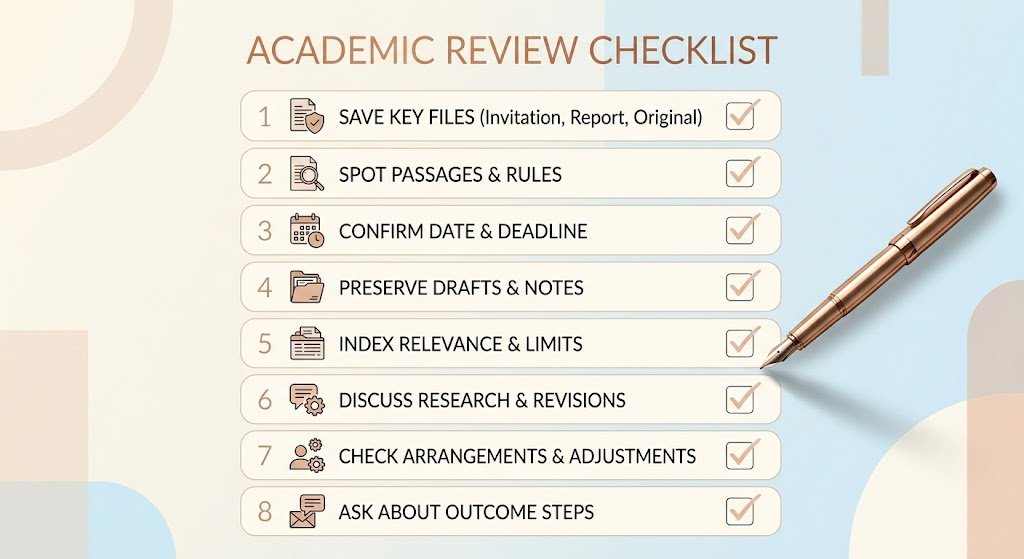
- Save the invitation, report and original submitted file.
- Identify the questioned passages and applicable assessment rules.
- Confirm the meeting date and evidence-submission deadline.
- Preserve available drafts, notes, source annotations and assistance records.
- Prepare a concise index explaining each item’s relevance and limits.
- Practise discussing your genuine research and revision decisions.
- Check support-person arrangements and any adjustments you need.
- Ask how the outcome and any next steps will be communicated.
Before the meeting, aim for a clear account of what you did, supported by what you genuinely have. If you do not remember a detail, say so. Ask for clarification when a question or passage is unclear.
For future submissions, where your university permits language support, explore Oxford Editors’ proofreading and editing services in UK for help with grammar, clarity and consistency. Also get help from our expert essay writing service. Confirm the permitted scope first. Proofreading does not establish authorship or resolve an allegation.
Frequently Asked Questions
Can an AI Detector Flag Writing I Produced Myself?
Yes. Turnitin acknowledges that its AI-writing model can misidentify human-written text. That possibility does not establish the cause of a particular result. Ask which passages are being questioned and respond with your genuine writing records and explanation. Your institution should assess the concern through its applicable procedure.
Does a Low Similarity Score Answer an AI-Writing Allegation?
No. Turnitin’s similarity and AI-writing results address different questions. A similarity report identifies matching text; its AI-writing assessment considers qualifying prose for likely AI generation. Respond to the actual concern in your invitation. A low result on one measure does not establish the origin of the work.
Is Version History Enough to Establish Authorship?
Version history can help show how a document changed, but it is not a guaranteed answer on its own. Explain relevant changes and connect them to sources, notes or feedback where available. Be clear about gaps. The institution will assess the material in the context of its concerns and procedure.
What Should I Do If I Wrote Everything in One File?
Keep that file and check whether any genuine earlier versions or backups exist. Look for other existing evidence, including plans, annotated readings or correspondence about the assignment. Explain your working method honestly. If you prepare a timeline now, label it as retrospective and distinguish remembered details from recorded ones.
Should I Run My Essay Through Another AI Detector?
A second detector result does not show how you wrote the assignment and cannot guarantee that your institution will dismiss a concern. Prioritise the requested evidence and your own writing records. Before using another service, check its terms and any restrictions on sharing the assignment or included research material.
Can I Bring Someone to the Meeting?
Check the procedure and invitation, because arrangements differ between institutions and meeting types. Ask your students’ union or student adviser who may attend and what role they can play. Confirm the arrangement in advance, along with any adjustments you need. Do not assume a particular supporter is automatically permitted.