
A university may investigate how an assignment was produced using the work itself, source checks, available drafts and a student’s explanation. But a marker’s impression or a detector result cannot reliably identify ChatGPT use on its own. There are three separate questions: was AI involved, what contribution did it make, and did that contribution breach the assessment rules?
This guide looks beyond scores to the academic decisions behind a submission. It follows a fictional essay through questions about evidence, terminology and method, showing what each observation leaves unresolved. The aim is to help you understand and explain your own assignment work. University examples are attributed to their published guidance, your own assessment and procedures determine what applies.
Can a University Tell You Used ChatGPT?
Sometimes there may be direct information about AI involvement, such as an acknowledgement or the student’s own account. Other concerns require investigation. Establishing that a claim is wrong is different from establishing who or what produced it. Even establishing AI involvement does not settle whether the specific use was authorised.
LSE’s staff guidance explains that detectors have no insight into the work that happened before the final text. A model’s classification cannot describe the student’s complete research, planning and writing process. The useful questions concern contribution, understanding and compliance with the task, rather than a simple “human or AI” label.
LSE: staff guidance on GenAI and assessment
What Markers May Check Beyond Detectors
Glasgow’s 2026 guidance identifies issues in content, references and presentation that may warrant further inquiry. Examples include claims unsupported by their citations, inaccurate information and limited engagement with the question. It also cautions that these characteristics do not automatically establish AI use or misuse. Treat them as questions to investigate, not a diagnostic checklist.
Glasgow: identifying potential concerns
| Observation | What It Can Establish | What Remains Uncertain |
|---|---|---|
| A cited source does not support a sentence | There is a claim–evidence mismatch to resolve. | Why the error arose and whether any tool was involved. |
| An argument stays broad and misses the set question | The answer may lack relevant analysis. | Whether this reflects weak understanding, drafting or another cause. |
| Vocabulary differs from earlier work | There is a change to understand in context. | Whether it reflects learning, assistance, topic differences or something else. |
| A record shows a revision | A particular change is documented. | Whether that record explains the whole production process. |
Table 1. Observations need interpretation; they are not automatic authorship findings.
Academic assignment quality and conduct also need separate attention. An essay can receive criticism for shallow analysis without establishing prohibited AI use. Conversely, fluent writing does not tell the marker whether the permitted boundaries were followed. A useful student review asks both whether the argument is good and whether the work was produced appropriately.

Follow One Assignment Through Three Questions
The following essay, source note and student are fictional teaching material. They are not a real case, quotation or study. It will help you in writing a good assignment. Imagine Noor submits an essay evaluating an online peer-feedback scheme. Three features prompt questions. None identifies ChatGPT by itself, and the examples do not predict a disciplinary outcome.
Question 1: Does the Source Support the Claim?
Noor’s essay says the scheme improved examination results. Her fictional source note describes participants reporting greater confidence. The marker notices that these are different outcomes. The first task is to establish what the real source would support, rather than to decide which tool caused the mismatch.
An honest clarification would identify the passage Noor consulted and explain how she moved from it to her sentence. If she overstated the result, she should acknowledge that accurately. If AI suggested the claim, she should describe that contribution truthfully under the task’s requirements. Simply proving that the reference exists does not resolve the mismatch.
Question 2: Can the Student Explain the Terminology?
Noor uses “selection bias”, a term absent from her earlier essay. That difference could reflect new learning. A meaningful question is how selection bias affects her evaluation of this particular scheme. Repeating a dictionary definition would explain less than connecting participant selection with the limits of the evidence.
If Noor learnt the concept through a lecture, reading or permitted assistance, she can explain that route. If she does not understand a term she included, she should say so and identify the gap. Unfamiliarity is a learning issue requiring context; this guide cannot turn it into proof of AI use.
Question 3: Why Was This Method Chosen?
Noor compares participant reflections instead of comparing examination marks. The marker asks why. Her actual rationale might be that reflections were the only evidence available, which limits what she can conclude. Relevant notes could show when she recognised that limitation and revised the essay’s scope.
A convincing explanation is specific and accurate, not necessarily polished. It should describe the decision she actually made. Inventing a reason after the event and presenting it as her original plan would misrepresent the process. If the method was poorly chosen, an honest explanation can still acknowledge that weakness.
| Essay Question | Useful Clarification | What It Does Not Settle Alone |
|---|---|---|
| Confidence or examination results? | Locate the source passage and explain the interpretation. | Whether ChatGPT or any other tool caused the error. |
| What does selection bias mean here? | Connect the concept with this scheme and explain how it was learnt. | The origin of every sentence in the essay. |
| Why analyse reflections? | Explain the actual evidence available and the method’s limits. | Whether every assessment permission was followed. |
Table 2. Three fictional questions connect the submitted work to the student’s decisions.
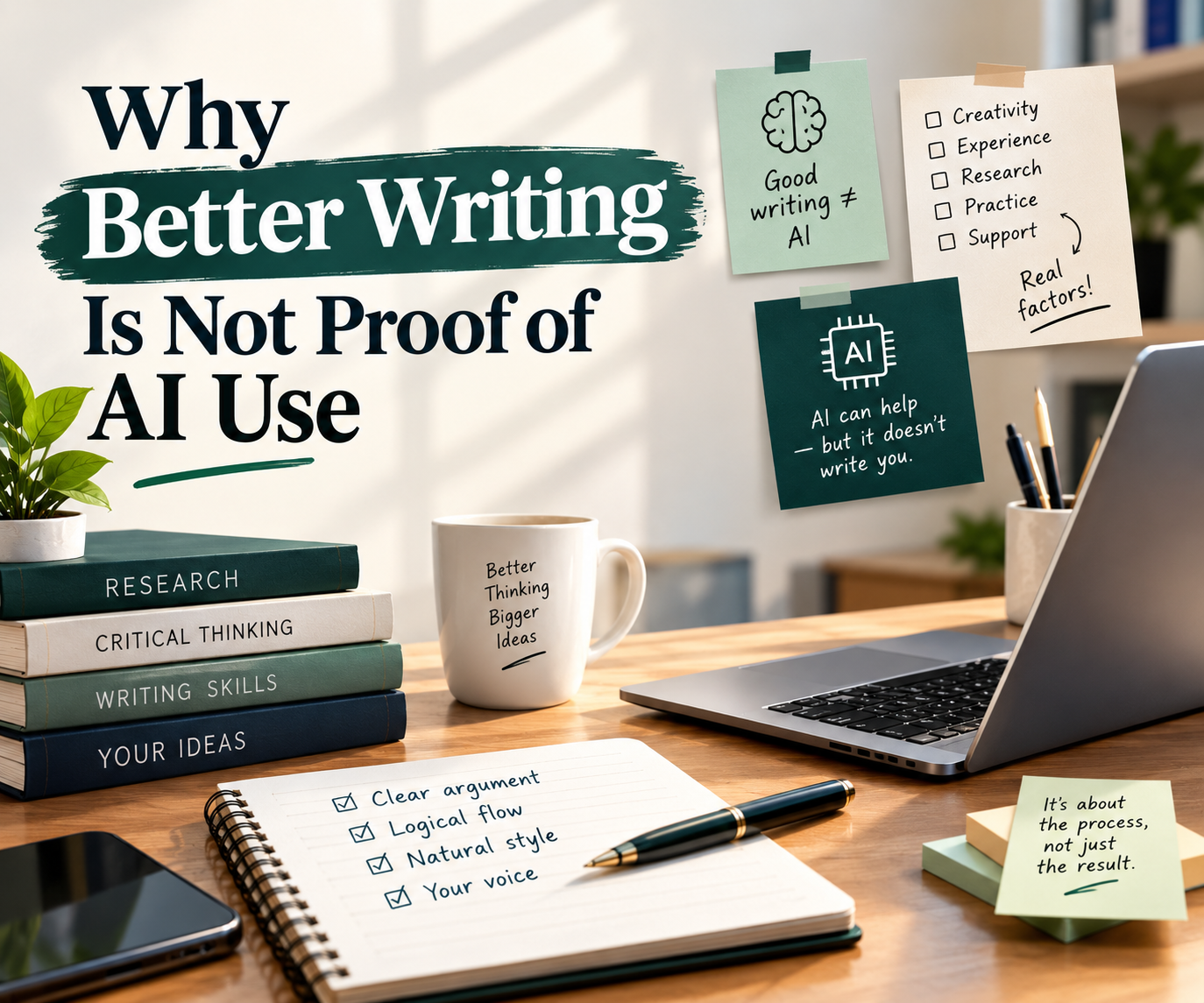
Why Better Writing Is Not Proof of AI Use
Improvement is part of university study. New reading, feedback and practice can change how someone writes. A difference from earlier work needs context; it should not be treated as a fixed limit on what a student can achieve. The comparison also needs to consider whether the task, topic or writing conditions differed.
In a February 2026 discussion, Oxford’s AI Competency Centre warns about inferring AI involvement from language or style alone. It notes that features described as AI-like can also occur in developing academic writing, and raises fairness concerns for students using legitimate support. This is the Centre’s published analysis, not a universal disciplinary test.
Oxford AI Competency Centre: the question of AI detection
Keep working towards clear, accurate prose. Deliberately adding mistakes or making writing awkward would not demonstrate ownership. Check any editing assistance against your assessment rules, including agreed support arrangements. A legitimate reason for a style change and permission for a particular tool are related questions, but neither should be assumed from the other.
What Drafts and Notes Can Help Explain
UCL’s library guidance advises students to retain drafts to help evidence their process. The value lies in connecting records with actual decisions. Keep materials you genuinely create through normal study rather than assembling a performance of continuous authorship. A draft can illuminate part of the work without establishing every earlier contribution.
UCL Library: evaluating and documenting GenAI assistance
| Existing Record | Decision It May Help Explain | Limit |
|---|---|---|
| Annotated reading | Which passage informed an argument and what you understood. | Does not establish how every sentence was written. |
| Outline or intermediate draft | How the structure or scope developed. | May cover only one stage of the work. |
| Data, calculation or coding notes | How a result was obtained or checked. | Needs to correspond with the submitted method and results. |
| Permitted AI-use record | Which task a tool supported and how output was handled. | Does not itself grant permission or validate the final content. |
Table 3. Practical examples, not a universal mandatory evidence pack.
If records are incomplete, describe that honestly. An absent version history does not let this guide determine an outcome. Nor does a detailed history guarantee that a submission meets the rules. Preserve original files and respond through the university’s stated process if records are requested. Do not recreate missing prompts or notes and pass them off as original records.
If You Are Asked to Discuss Your Work
Manchester describes discussions about how work was produced and the student’s subject knowledge as possible evidence. Glasgow also describes exploratory interviews and requests for drafts before a referral. Institutions differ in terminology and procedures, so read the actual invitation and ask what the discussion covers if this is unclear.
Manchester: handling concerns about GenAI misuse
Preparation should mean revisiting your own work. Read the relevant sources, methods and revisions so you can describe them accurately. Illustrative questions might include: “Which passage supports this conclusion?”, “Why did you reject the alternative method?” or “What changed between these drafts?” These are reflection prompts, not predictions of an interview or model answers to memorise.

A discussion is not a perfect test of authorship. Newcastle’s assessment guidance recognises that oral assessments can be stressful and calls for safeguards concerning language, accessibility and vulnerable students. If a concern affects your ability to participate, raise it through the appropriate university support route and ask what arrangements apply. Do not assume a specific adjustment is automatic.
Newcastle: oral assessment and safeguards
During a discussion, distinguish what you remember from what a record confirms. It is reasonable to identify a mistake or say you need to locate a passage. Answer the question actually asked; avoid inventing certainty. Follow the instructions provided and seek your students’ union or equivalent advice service if you need support with a formal process.
AI Use and AI Misuse Are Different Questions
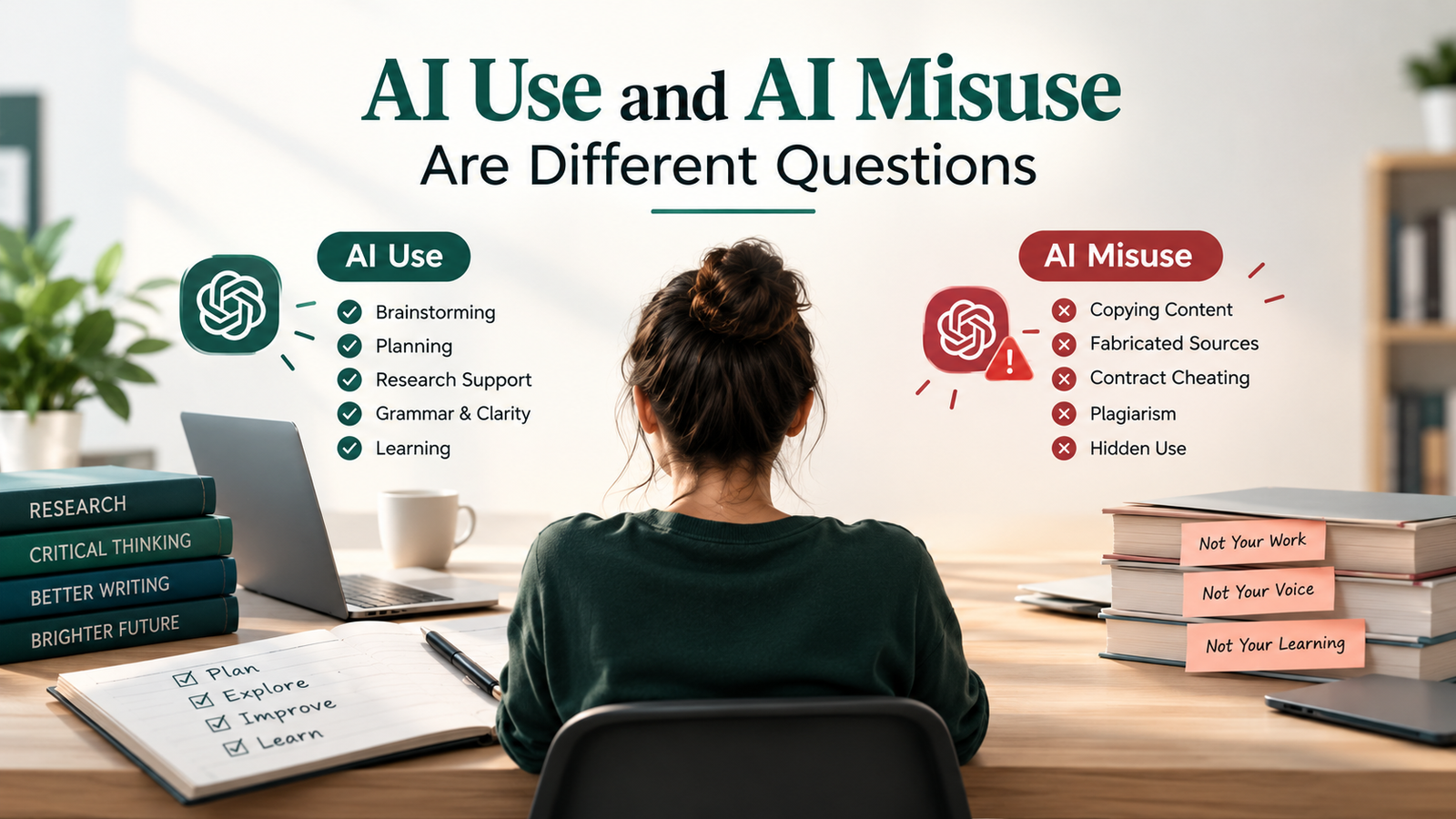
Return to the assessment instructions before drawing conclusions about an AI contribution. Identify what activity occurred, whether it was permitted and what acknowledgement was required. A declared, permitted activity is a different situation from outsourcing a prohibited part of the task. Acknowledgement alone does not make an unauthorised action acceptable.
For example, a fictional brief might allow students to ask for questions about their own draft while prohibiting generated analysis. Explain the function actually used rather than merely naming ChatGPT. The tool name does not tell the reader whether it questioned a draft, proposed an argument or wrote assessed content. This example gives no permission for your own assignment.
The same care applies to editing support. Establish the permitted boundaries before using it, and keep the academic decisions your own.
Check university policy before using proofreading support
Final Word: Understand the Work You Submit
The most useful question before submission is whether you understand the decisions your assignment contains. Can you connect a conclusion with its evidence, explain a method and account honestly for assistance? That understanding matters even when nobody raises a concern. Keep developing clear writing without trying to imitate a detector’s idea of a human author. Use permitted support thoughtfully, correct mistakes and preserve an accurate account of your process. Academic ownership becomes meaningful through the choices you make and can explain.
Get assistance in academic writing from Oxford Editors to achieve higher grades. We also offer assignment writing services in UK. For broader reflection on your judgement when working with AI, use our student critical-thinking guide.
AI and critical thinking: a student’s self-check
Frequently Asked Questions
Can a Marker Identify ChatGPT Rather Than Another AI Tool From My Prose?
Do not treat a writing pattern as a reliable product fingerprint. The university guidance discussed here supports investigating specific concerns and context; it does not establish that prose alone identifies a particular chatbot. Direct information, such as your accurate account of tool use, is a different kind of evidence. Describe the actual contribution rather than relying on a label inferred from style.
Does a Weak Oral Explanation Prove I Did Not Write the Assignment?
It should not be treated by this guide as a standalone proof of authorship or its absence. Understanding, memory, anxiety and the conditions of the discussion need context. Newcastle recognises the stress and accessibility issues oral assessments can create. Follow your university’s process and raise relevant participation needs promptly. Explain what you know honestly rather than inventing a confident answer.
Should I Make Polished Writing Less Fluent to Appear Human?
No. Focus on clear expression, accurate evidence and the assessment requirements. Oxford’s AI Competency Centre highlights the harm of students writing defensively because they fear being flagged for fluency. Deliberate mistakes do not explain how you developed an argument. Keep legitimate improvements and be accurate about any assistance used, checking that the particular activity was permitted.
How Should Approved Assistive Technology Be Considered?
Raise the relevant approved arrangement through the appropriate university route so it can be considered in context. Do not assume that a marker’s impression of style reveals what support was used or whether it was authorised. Check how your arrangement applies to the assessment and clarify uncertainties with the support team or module staff. This guide cannot determine the scope of an individual adjustment.
What if I Used Permitted AI but Cannot Retrieve the Original Conversation?
Describe the use accurately and check what the assessment specifically required you to retain or submit. Identify the records you still have and be explicit about what is missing. Ask the module team how to address an unmet documentation requirement; do not assume permission removes it. Never reconstruct a conversation and present it as the original exchange.