
Dissertation proofreading in the UK has no single standard price. Published provider examples checked on 8 October 2026 start at £10 per 1,000 words, making a 10,000-word dissertation £100 at that particular rate. A tighter deadline, more complex document or broader editing service can increase the quote. These examples are market references, not Oxford Editors’ prices.
The useful question is what your total fee covers. Before booking, confirm the chargeable word count, delivery date, permitted checks and final amount. This guide explains how to estimate your budget, recognise extra charges and compare dissertation proofreading quotes without paying for support you do not need. Understand UK dissertation proofreading cost, pricing factors, extra charges and university rules, to help you compare quotes clearly.
Two reviewed UK providers advertise £10 per 1,000 words for dissertation proofreading or a proofreading and basic editing package. One advertises £100 for a 10,000-word document with a 96-hour turnaround and £160 with a 24-hour turnaround. These are dated examples of individual offers, not evidence that all services charge within that range. Package names and inclusions also differ.
Table of Contents
ToggleFor a professional hourly benchmark, the Chartered Institute of Editing and Proofreading (CIEP) lists £31.92 as its suggested minimum proofreading rate for 2026–27, effective from 1 March 2026. This is neither an enforced minimum nor a standard dissertation fee. An hourly benchmark cannot become a per-word quote without an estimate of the work involved.
Source: CIEP suggested minimum rates for 2026–27
A sensible budget therefore starts with your actual manuscript and a written quote. Treat a headline “from” price as a starting point until the provider confirms your document qualifies. A price for proofreading alone is also a poor comparison with a package containing language editing or additional formatting.
Per-word pricing multiplies the words included in the service by the quoted rate. For example, £0.01 per word means £10 per 1,000 words. At that rate, a 12,000-word file would cost £120 before any separately quoted extras. Check the units carefully: £0.01 is one penny, not one pound.
For a rate per 1,000 words, use this calculation: chargeable word count ÷ 1,000 × quoted rate. Ask whether the provider charges the exact count or rounds it up. A 10,400-word manuscript can have a different total if the service bills in whole 1,000-word blocks.
Hourly pricing depends on both the rate and the estimated hours. Request an estimate and ask how additional time will be authorised. A fixed project price can make budgeting easier, provided the agreement identifies the manuscript version, checks included and any circumstances that would change the fee.

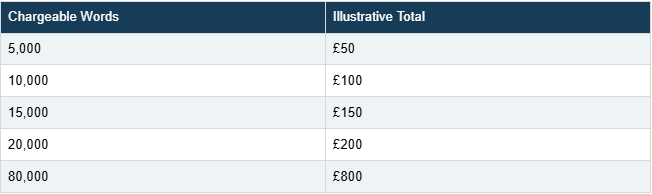
Table 1 shows the arithmetic at an illustrative £10 per 1,000 words, using the advertised starting-rate examples checked on 8 October 2026. It is a calculation aid, not a national price range, a guaranteed offer or an Oxford Editors quotation. The 80,000-word example illustrates a longer manuscript; it is not a universal PhD word limit.
Table 1. Illustrative totals at £10 per 1,000 chargeable words
For a worked example, suppose your main chapters contain 10,000 words and you also want 2,000 words of references and supporting material checked. If all 12,000 words are billable, the example total becomes £120 rather than £100. Your university’s assessment word count may exclude material that the proofreader still needs to read.
For a master’s dissertation or PhD thesis, request the quote using the file you intend to send. Do not assume academic level alone determines the charge. The amount and complexity of the actual work are more useful than the degree label.
Urgent delivery can attract a higher fee because it changes how the editor schedules the work. The CIEP identifies speed as one factor affecting rates. Ask for the return date and time, not just “next-day delivery”. Keep enough time afterwards to read comments, decide on suggested corrections and check the final submission file.
A nearly finished manuscript with consistent presentation is a different task from a draft with frequent language errors. Specialist terminology and difficult file formats may also affect the work required. Sending a representative sample helps the provider assess the service accurately; a polished introduction alone may not represent the whole document.
Confirm whether the quote covers the full manuscript, selected chapters, figure captions, footnotes and appendices. Ask how the editor handles Word, PDF or another format. If conversion is needed, check whether it is included and whether equations, tables and layout will remain usable. Do not assume every service accepts every file type.
Proofreading is a final check for errors and inconsistencies. Depending on the agreed scope and university rules, it may involve identifying spelling, punctuation and grammar problems, inconsistent terminology, heading styles and presentation issues. Ask whether the provider supplies comments, tracked suggestions or direct corrections, and which approach your institution permits.
References deserve a specific question. A check for inconsistent punctuation or formatting is different from verifying that sources exist, confirming quotations or rebuilding a referencing system. Likewise, checking a table label is different from checking the calculations inside that table. These tasks should not be silently bundled under “proofreading”.
Oxford Editors describes language, formatting and consistency checks on its proofreading and editing page. Its published description also distinguishes referencing inconsistencies from full citation verification. Request a scope appropriate to your university’s policy rather than assuming every advertised check is acceptable for assessed work.
Service labels are not consistent across providers. Some packages combine proofreading with language editing; others keep them separate. Compare the actual intervention, rather than choosing solely by the name or price.
Table 2. Checks to distinguish when comparing services
Service | Main Purpose | What to Confirm |
|---|---|---|
Proofreading | Identify final language and presentation errors | Whether advice, tracked suggestions or corrections are permitted |
Language or Copyediting | Improve wording and sentence-level expression | Whether your institution allows this intervention |
Structural Editing | Review organisation and argument flow | Do not assume it is permitted for assessed work |
Formatting or Reference Checks | Check specified presentation details | Exact scope and university restrictions |
Before buying any package, read your department’s current rules. Cambridge’s proofreading statement permits identifying specified errors but prohibits changes to ideas, arguments and structure. It also distinguishes advice from making corrections. Other institutions may set different limits. Share your own policy with the proofreader and retain responsibility for the submitted work.
Source: Cambridge guidance on student responsibilities and proofreading
For broader preparation before the final check, use Oxford Editors’ dissertation guide to review the stages of your own work.
Related reading: How to write a dissertation for UK students
Ask for the final payable total, including VAT where applicable, rather than assuming the advertised figure includes it. Confirm any minimum fee, rush charge, conversion cost or separately priced formatting work. These are items to clarify, not charges every provider necessarily applies.
Also ask what happens after delivery. Correcting something missed in the original agreed scope is different from reviewing new paragraphs you add later. A revised manuscript or another full reading may require another fee. Get the policy in writing before paying, especially if your supervisor is still likely to request changes.
Complete your revisions before booking. Otherwise, you may pay to check text that later disappears or need another review of new material. Resolve research and argument questions yourself, with your supervisor’s guidance, before arranging a final language check.
Allow a realistic deadline and ask whether a longer turnaround changes the price. Run your own spelling and consistency checks first, then review the suggestions carefully. Software can help you prepare a cleaner draft, but it does not establish that the references, technical wording or permitted scope are correct.
If the budget is limited, ask whether selected chapters can be checked. Be clear about what will remain unchecked, including consistency between chapters. Buying fewer checks can reduce the scope, but it should be a deliberate choice based on the document’s needs rather than a surprise after delivery.
Send the same manuscript and requirements to each provider so the quotations are comparable. Include the file word count, academic level, subject, submission deadline, university proofreading policy and any permitted presentation checks you need.
A useful quote lets you explain exactly what you are buying. The cheapest offer may cover fewer checks; the highest fee may include work you do not need or cannot use. Choose a clear scope, a workable deadline and support that fits your institution’s rules.
If you would like a clearer idea of the cost for your dissertation, share your word count, deadline and required checks with Oxford Editors professional proofreading & editing services in UK to request a tailored quote. Include your university’s proofreading policy so the proposed support matches the rules for your submission.
It depends on the provider’s charging policy and the material you ask them to check. The assessment word count may exclude references, footnotes or appendices, while a proofreading quote may include them. Send the complete file and request confirmation of the billable count before approving the fee.
Ask whether the provider accepts selected chapters and whether a minimum fee applies. This can make a smaller scope easier to budget for, but it leaves the remaining text unchecked. Specify whether cross-chapter terminology, references and heading consistency are included, since a chapter-only review cannot automatically cover the whole dissertation.
The original agreement should explain this. New content and substantial revisions can require a fresh review, while a correction of an error missed in the agreed work may be handled differently. Ask about both situations before booking, and avoid sending a draft that is still awaiting major changes from your supervisor.
No proofreading quote can establish the grade your dissertation will receive. A language check does not prove that the research, methodology or analysis meets the assessment criteria. Focus on the agreed deliverables and review all suggestions yourself. Your department assesses the submitted work, and you remain responsible for its content.
Nationality alone does not explain the amount of work required. Compare quotes using the same manuscript, deadline and scope. If a provider proposes a higher fee for language editing, ask what additional work is included and whether it is permitted by your institution. A representative sample is more informative than assumptions about your first language.
It may help you find spelling mistakes and repeated inconsistencies before you request a quote. However, review suggestions rather than accepting them automatically, particularly around technical terms and meaning. Follow your university’s rules for AI and writing tools, and check privacy arrangements before uploading research material. A cleaner draft does not guarantee a lower fee.